
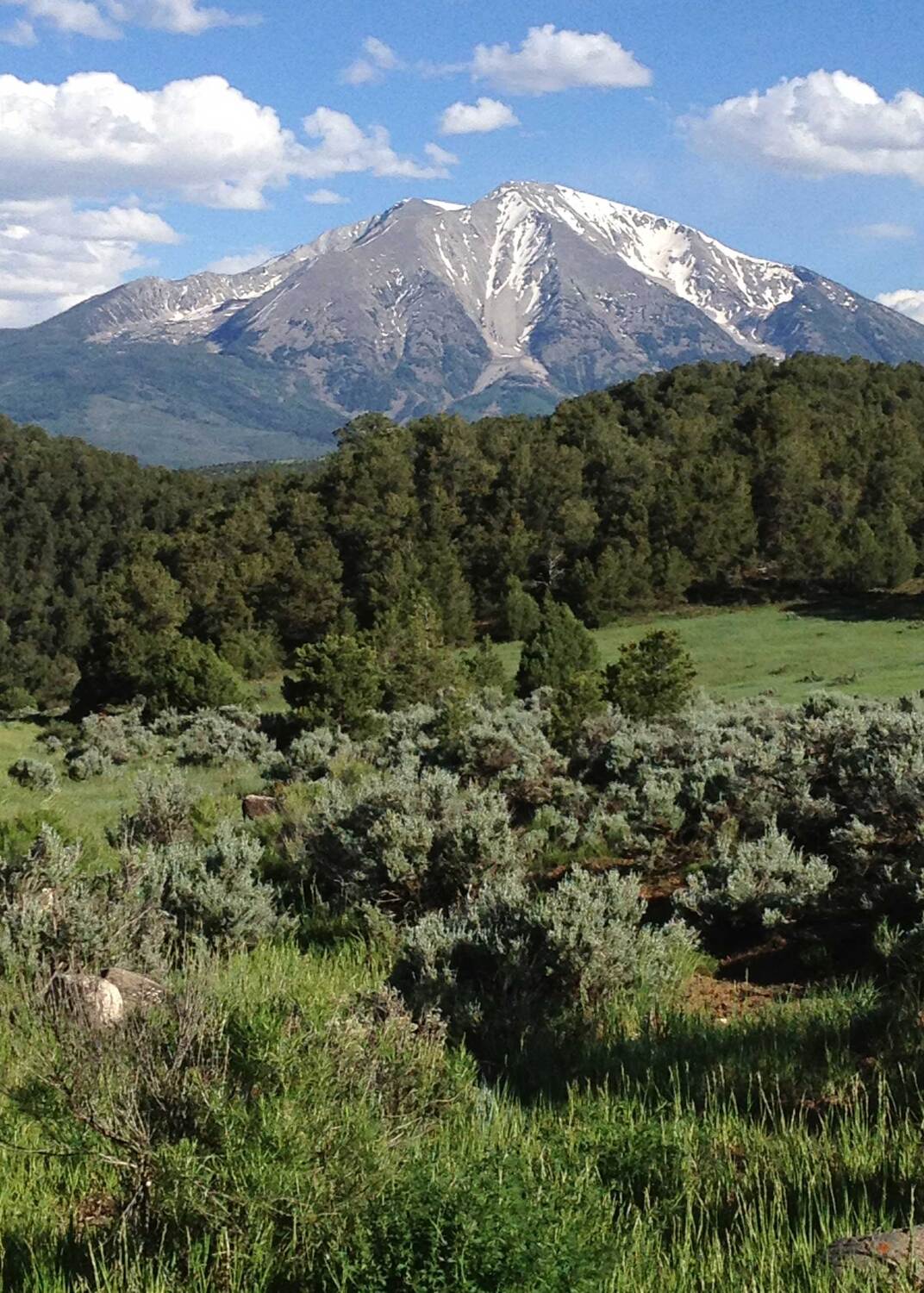
The Colorado Outdoor Opportunities Act (HB26-1008) reportedly does not create new public access rights or alter private property ownership. Instead, it strengthens how Colorado plans and coordinates outdoor recreation statewide, with Colorado Parks and Wildlife playing a larger role. For landowners, the bill’s importance is indirect but real: recreation is now embedded as a long-term planning priority, influencing infrastructure investment, conservation strategy, and grant funding decisions. Engagement in regional planning processes, where participation is voluntary, will matter more going forward.
Colorado Outdoor Opportunities Act (HB26-1008) is less about creating new public access mandates and more about strengthening how Colorado plans, funds, and coordinates outdoor recreation statewide. For landowners, its significance lies not in what it immediately changes, but in how it reshapes the planning framework around you.
At its core, the bill expands the role of Colorado Parks and Wildlife (CPW), within the Colorado Department of Natural Resources, to lead more integrated recreation planning. The intent is balance: recreation growth alongside wildlife conservation, working agriculture, private property rights, and climate resilience.
What It Actually Does
- Strengthens statewide recreation planning. CPW gains clearer authority to coordinate regional and statewide recreation strategies across agencies and stakeholders.
- Increases interagency coordination. Land management entities, local governments, and federal partners (e.g., U.S. Forest Service, Bureau of Land Management) are expected to operate within more unified planning frameworks.
- Supports infrastructure investment. Emphasis on trails, access points, habitat-sensitive design, and water-based recreation infrastructure.
- Affirms multiple-use principles. The bill explicitly references agriculture, wildlife, and conservation as co-equal considerations—not afterthoughts.
What It Does Not Do
- It does not create new public access rights to streams or private lands. Separate proposals—such as the Colorado Stream Access Act—address navigability and stream access debates. HB26-1008 focuses on planning capacity, not access mandates. There’s no new stream or river access right here — that remains governed by long-standing court precedent and existing statutes.
Why It Matters to Colorado Landowners
Recreation is now one of Colorado’s largest economic sectors, with outdoor recreation contributing billions annually to the state economy (per federal outdoor recreation economic accounts). Demand pressure will not recede.
HB26-1008 signals:
- More coordinated recreation expansion, especially near high-growth corridors.
- Greater scrutiny on habitat and climate resilience, which may influence land-use decisions and grant funding priorities.
- Potential partnership opportunities (easements, trail alignments, access agreements) where landowners choose to participate.
- Indirect impacts on property value in recreation-adjacent areas—both positive (amenity premium) and negative (pressure, conflict, trespass risk).
In practical terms, this bill institutionalizes recreation as a long-term planning priority at the state level. For agricultural producers and large landholders, it reinforces a reality already underway: recreation, conservation, and working lands are being woven into a single policy conversation.
The key takeaway: HB26-1008 does not change your property rights, but it strengthens the planning architecture around outdoor use statewide. Engagement early in regional planning processes will matter.
Colorado Stream Access Act — Where Things Really Stand
No official bill number or active legislation yet.
- As of early 2026, there’s no formal “Colorado Stream Access Act” introduced with a numbered bill in the General Assembly, and no current bill on the legislative docket by that name.
- Instead, what exists publicly is draft model legislation and advocacy proposals (e.g., draft frameworks circulated by interest groups) aimed at clarifying or expanding public rights to float, wade, or fish on waterways. (coloradostreamaccess.org)
Background & Context
- Colorado’s current access regime stems from case law and historical judicial decisions, most notably a 1979 Colorado Supreme Court ruling that limited public rights when rivers flow through private land, even for recreation, unless there’s express permission. (The Drake Magazine)
- Advocates (like the Colorado Stream Access Coalition) argue that the state should adopt a true stream access statute recognizing public rights to navigate and use waters up to the high-water mark, similar to other Western states. (coloradostreamaccess.org)
- Opponents (including many landowners and property rights groups) argue that forced access through private land would amount to a taking without compensation.
Where That Effort Is Now
- In late 2025 and early 2026, there was discussion and draft language circulating about a potential stream access bill — but nothing introduced as a formal numbered bill in the legislature yet. (coloradostreamaccess.org)
- Advocacy and debate are still underway about whether to pursue statutory clarifications on navigability and the scope of public rights.
Bottom line: HB26-1008 is structural, shaping how outdoor use is managed. The stream access debate remains a separate, unresolved policy fight, with future legislation possible but not yet formally before the General Assembly.
Sources: Colorado General Assembly (HB26-1008 bill text and fiscal note), Colorado Parks and Wildlife, Colorado Department of Natural Resources, U.S. Bureau of Economic Analysis Outdoor Recreation Satellite Account, Colorado Outdoor Recreation Industry Office
About the Author
Shiloh Wittler is an Associate Broker with Mason & Morse Ranch Company based in Eagle, Colorado. Shiloh has a passion for agriculture and the western way of life, with experience in agricultural, rural, transitional, recreational, and natural resource properties.