
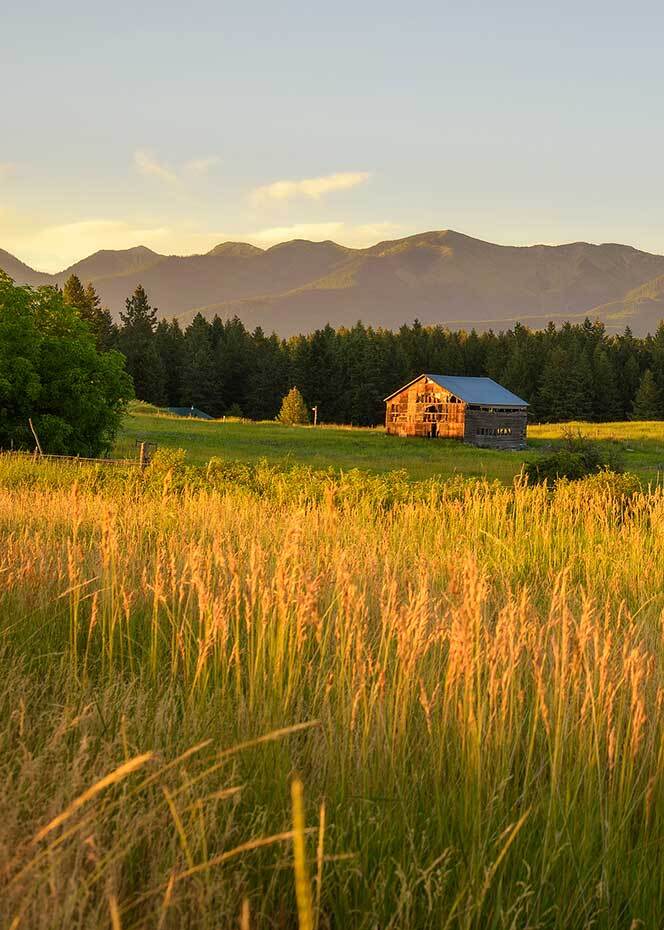
Conservation Easements, Ranching and the Legacy of Western Stewardship
Written by Shiloh Wittler, Broker Associate, Mason & Morse Ranch Company
Straight to the point: The greatest conservation success story in the American West is not conservation easements. It is the people who, with commitment, have been buying, owning, operating, and stewarding large working landscapes for generations.
Who Has Conserved the American West?
Across the West, a familiar conversation never really fades. Instead, it seems to grow louder with each passing year: more land should be protected, more ranches should be conserved, and more conservation easements should be created.
What was once an occasional or cyclical discussion has evolved into something that could almost be described as a defining movement in Western land ownership. Yet rarely do we stop to ask a simpler question:
Who has actually conserved these landscapes for the last century?
Long before conservation easements became common—or were even an available option—ranching families were building fences, developing water systems, managing grazing rotations, restoring rangelands, controlling invasive weeds, improving wildlife habitat, paying property taxes, and making the countless decisions required to keep large landscapes healthy and intact.
Much of the wildlife habitat, migration corridors, productive rangelands, agricultural land, and open space that define the American West today exist because these ranches remained economically viable and under thoughtful private stewardship.
What Is a Conservation Easement?
A conservation easement is generally a voluntary legal agreement through which a landowner permanently limits certain uses or development rights associated with a property in order to preserve identified conservation values.
Conservation easements have become one of the most discussed—and perhaps one of the most misunderstood—aspects of ranch and land ownership in the West.
Much of that misunderstanding stems from a simple reality: conservation easements are complex legal agreements, and many people encounter them only through secondhand conversations or isolated experiences.
At the same time, conversations surrounding conservation are often shaped by the perspectives and objectives of those participating in them. Whether intentional or not, personal experiences, professional interests, and desired outcomes can influence how conservation easements are presented, valued, and understood.
The result is that misconceptions can persist, creating expectations that do not always reflect how conservation easements function in practice.
Are Conservation Easements Good or Bad for Ranches?
Depending on who is speaking, conservation easements may be celebrated as one of the greatest conservation tools ever created or criticized as a threat to private property rights.
The reality is far less ideological.
Conservation easements are neither inherently good nor inherently bad. They are simply one tool available to landowners among many.
As is often the case with complex land ownership decisions, the answer lies somewhere in between the extremes.
Conservation Easements as an Asset Management Tool
Conservation easements are often discussed as land management tools. I would argue they are better understood as an asset management tool.
A conservation easement by itself does not improve grazing practices, restore riparian habitat, increase wildlife populations, control invasive species, or make a ranch economically sustainable.
Good stewardship accomplishes those things.
A conservation easement instead changes one component of how a ranch may be owned, valued, financed, developed, and ultimately transferred to future generations.
That distinction matters because the narrative surrounding conservation success often begins with the property when it should begin with the landowner and the property's history of stewardship.
Every ranch is unique, but so is every ranching family.
Does a Conservation Easement Make Sense for Every Ranch?
No. A conservation easement may be an excellent fit for a particular ranch while being completely misaligned with the owner's financial objectives, estate plan, or long-term vision.
Conversely, a landowner may be attracted to the potential financial incentives associated with a conservation easement while the property itself may not be the best candidate for one.
Neither the land nor the landowner should be evaluated independently. The decision must make sense for both.
Before pursuing a conservation easement, landowners should consider how the agreement could affect the ranch operationally, financially, legally, and generationally.
Conservation Easements Do Not Create Stewardship
Too often, conservation easements are discussed as though they are the answer to a conservation problem.
In reality, they rarely solve land management challenges. They do not create good grazing practices, healthy soils, strong agricultural operations, abundant wildlife, or responsible landowners.
Instead, conservation easements generally place restrictions on certain future uses of a property while protecting conservation values that already exist.
Conservation easements do not create conservation. They can help protect conservation that already exists.
The distinction is important.
Healthy Western landscapes are ultimately the result of generations of management decisions involving livestock, water, wildlife, vegetation, infrastructure, economics, and changing environmental conditions.
The Financial Considerations of Conservation Easements
The financial side of the conservation easement conversation warrants the same balanced perspective.
A conservation easement can potentially provide meaningful financial benefits to certain landowners. Depending on the structure of the transaction and applicable laws and programs, it may provide immediate liquidity through the sale of development rights, contribute to estate planning strategies, or provide potential tax benefits.
For some ranching families, those benefits may be exactly what allows a ranch to remain intact across generations.
However, those benefits should not automatically be confused with creating new market value or wealth.
In many situations, a conservation easement effectively converts a portion of a property's potential future value into present-day financial benefits. The landowner receives current financial consideration or incentives in exchange for permanently limiting certain property rights that may otherwise contribute to the property's market value.
For families facing estate challenges, succession planning concerns, or liquidity needs, that tradeoff may be entirely appropriate.
For others—particularly those focused on maximizing long-term appreciation, retaining development potential, or preserving flexibility for future generations—it may not be.
Because conservation easements are permanent legal agreements, landowners should carefully evaluate the financial, tax, legal, estate planning, and real estate implications with qualified professionals before making a decision.
Conservation Easements and Generational Ranch Ownership
One of the most important considerations for Western landowners is how decisions made today will affect the next generation.
For some families, conservation easements may become part of a broader strategy designed to preserve ranch ownership, address estate planning needs, provide liquidity, or reduce development pressure.
For others, permanently restricting certain property rights may limit opportunities that future generations would otherwise have available to them.
There is no universal answer because there is no universal ranching family.
The appropriate strategy depends on the land, the operation, the family's financial position, ownership structure, succession plan, and long-term goals.
The Goal Should Be Healthy, Economically Sustainable Landscapes
Like any significant investment or asset management decision, there is no single answer that applies to every Western ranch.
Conservation easements should certainly be recognized and discussed for the value they can potentially provide landowners as an asset management tool.
However, I am not convinced the objective should ever simply be to maximize the number of conservation easements.
The objective should be to maximize the number of healthy, intact, economically sustainable working landscapes across the American West.
Sometimes a conservation easement helps accomplish that goal.
Sometimes it does not.
Stewardship Remains the Foundation of Western Conservation
Healthy landscapes are created through thousands of decisions made year after year by the people who own, operate, and care for them.
Those decisions include managing livestock responsibly, maintaining water resources, controlling weeds, improving habitat, investing in infrastructure, adapting to drought and changing markets, and maintaining the economic viability necessary to keep the ranch intact.
A conservation easement may help protect that legacy.
But it cannot replace it—and it cannot create it.
The enduring conservation story of the American West remains the landowners and ranching families who have cared for these landscapes for generations.
Frequently Asked Questions About Conservation Easements and Ranching
What does a conservation easement do to a ranch?
A conservation easement generally places permanent restrictions on certain future uses or development rights associated with a ranch while allowing the land to remain privately owned. The specific restrictions, permitted uses, and landowner rights depend on the individual conservation easement agreement.
Can you still ranch land with a conservation easement?
In many cases, yes. Conservation easements on agricultural properties are frequently structured to allow continued farming, ranching, grazing, and other agricultural activities. However, every conservation easement is different, so landowners should carefully review the specific terms of the agreement.
Does a conservation easement reduce ranch value?
A conservation easement may affect a property's market value because certain development or land-use rights are permanently restricted. The impact varies significantly depending on the ranch, its location, development potential, easement terms, retained rights, and market conditions.
What are the potential financial benefits of a conservation easement?
Depending on the transaction structure and applicable programs, potential benefits may include compensation for development rights, tax considerations, estate planning advantages, or liquidity that can help support continued family ranch ownership. Landowners should consult qualified legal, tax, appraisal, estate planning, and real estate professionals regarding their specific situation.
Are conservation easements permanent?
Most conservation easements are designed to be permanent and remain attached to the property when ownership changes. Because the terms can affect future generations, evaluating the long-term implications before entering an easement is essential.
Are conservation easements the same as good land stewardship?
No. A conservation easement can protect certain existing conservation values, but it does not replace active land management. Healthy rangelands, wildlife habitat, water resources, and economically sustainable ranches ultimately depend on responsible stewardship by landowners and operators.
About the Author
Shiloh Wittler is a Broker Associate with Mason & Morse Ranch Company, specializing in agricultural, recreational, and natural resource properties throughout the Rocky Mountain West. His experience as a real estate broker, certified general real estate appraiser, landowner, rancher, and manager provides a practical perspective on ranch values, stewardship, water resources, conservation, and Western land markets.