
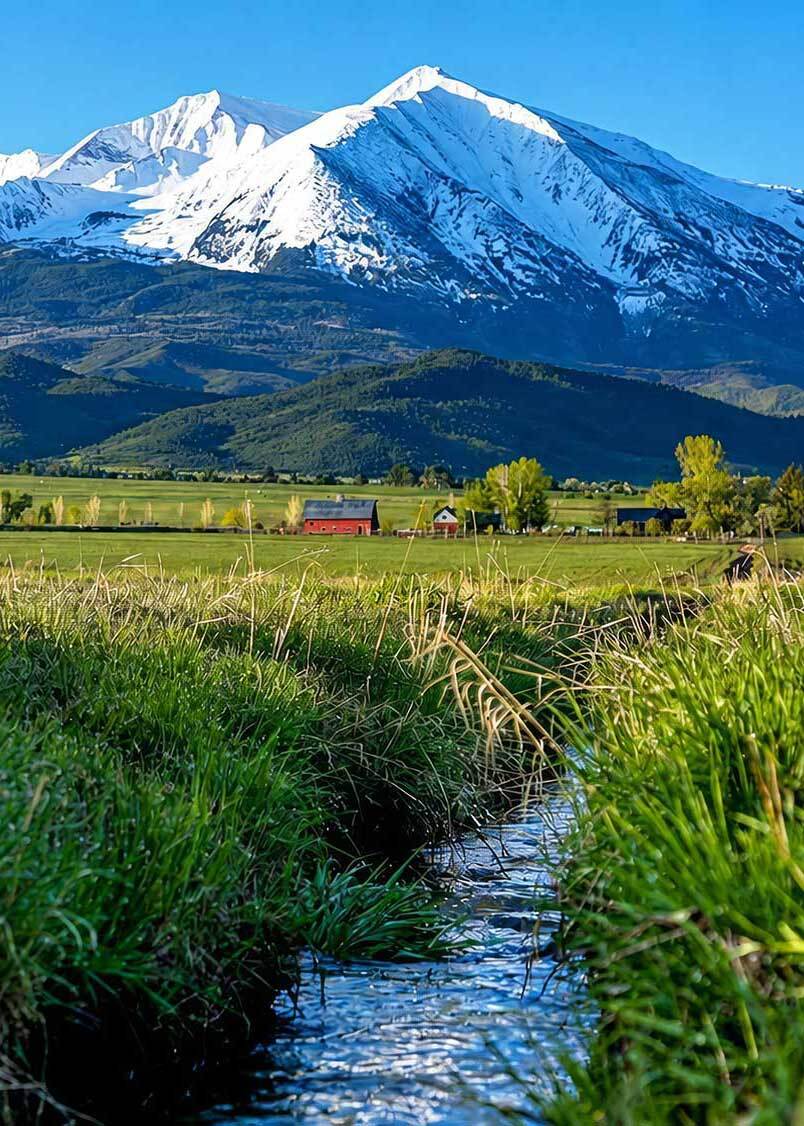
Current Ranch Real Estate Market Trends: The Growing Premium on Stewardship
Written by Shiloh Wittler, Broker Associate, Mason & Morse Ranch Company
Across today’s Western ranch real estate market, a notable trend is becoming increasingly clear: buyers are paying closer attention to the current condition and long-term stewardship of a property. While location, acreage, water rights, carrying capacity, productivity, and access remain fundamental drivers of ranch value, buyers are placing a growing premium on properties that have been thoughtfully maintained and are ready to operate or enjoy from day one.
In other words, buyers are asking an increasingly important question: Is the ranch truly turnkey?
Why Ranch Stewardship Is Becoming More Valuable
This trend is perhaps most pronounced in production agriculture and working ranch properties, where income generation, operational efficiency, and return on invested capital are primary considerations. However, the same shift is evident within recreational, hunting, equestrian, and lifestyle ranch markets.
Today’s ranch buyers are evaluating more than acres and improvements. They are considering how much additional time, capital, labor, and management will be required after closing.
A well-maintained ranch can provide something increasingly valuable in the current market: certainty.
Deferred Maintenance Can Affect Ranch Property Value
On paper, a ranch may support a value consistent with comparable sales. Once prospective buyers step onto the property, however, visible deferred maintenance can quickly change the conversation.
Fences needing replacement, aging infrastructure, neglected irrigation systems, invasive weeds, deteriorating roads, or buildings requiring substantial repair all become part of a buyer’s financial calculation.
Buyers are not simply estimating the direct cost of these improvements. They are also considering the time, labor, management, and uncertainty required to bring the property to the standard they envision.
The concept of “curb appeal” in farm and ranch real estate can sometimes be overlooked, but first impressions matter. A buyer who encounters deteriorating fences or neglected infrastructure may naturally begin wondering what other issues exist that cannot immediately be seen.
That uncertainty can have a meaningful impact on perceived value.
Why Turnkey Ranches Can Command a Premium
In many ranch markets, buyers appear increasingly willing to pay a premium for a property that is genuinely turnkey. A well-maintained ranch allows a new owner to focus on operating, enjoying, or improving the property according to their long-term goals rather than immediately addressing years of accumulated maintenance.
Conversely, ranches with significant deferred maintenance may experience value discounts greater than the actual cost of the necessary repairs.
Buyers are purchasing certainty as much as they are purchasing land.
As land values, construction expenses, equipment costs, and labor costs have increased throughout the West, this distinction has become even more important.
Some buyers may prefer a slightly smaller or less productive ranch that has been exceptionally maintained over a larger property requiring years of additional investment before it performs as intended. In certain situations, deferred maintenance can become substantial enough that otherwise qualified buyers simply move on to another opportunity.
Stewardship Can Influence Ranch Marketability
Good stewardship has tangible market value. It can influence not only the price a buyer is willing to pay, but also the overall marketability of a ranch for sale.
The investments made over decades in maintaining fences, livestock water systems, irrigation infrastructure, roads, buildings, pastures, and the overall health of the land can ultimately affect how quickly and successfully a ranch sells.
Two properties may appear similarly priced based on acreage and comparable sales, yet their performance in the marketplace can be very different. A ranch demonstrating years of thoughtful care may inspire buyer confidence immediately, while a property showing significant neglect may remain on the market considerably longer—even when its asking price appears reasonable on paper.
Drought Is a Stress Test for Western Ranches
Current drought conditions across portions of the American West further magnify the importance of sound ranch management and stewardship.
Drought can be the ultimate stress test for a ranch. It exposes the resilience of pastures, livestock water systems, irrigation infrastructure, grazing practices, and overall land management.
Well-managed properties often demonstrate their strength during difficult conditions, while years of deferred maintenance can become increasingly visible.
In many respects, drought doesn’t create problems—it simply reveals them.
For prospective buyers evaluating Western ranch properties, these conditions can provide valuable insight into how effectively a property has been managed over time.
Can Good Ranch Stewardship Increase Property Value?
Yes, although the value of stewardship can be difficult to quantify precisely. Buyers frequently recognize a well-managed ranch almost immediately through the condition of its land, infrastructure, water resources, improvements, and overall operation.
Comparable sales remain an essential benchmark when determining ranch property value, but comparable data cannot always capture the intrinsic value buyers place on the confidence created by decades of thoughtful ownership and care.
As annual land appreciation rates have begun to moderate in some regions, buyers may become increasingly selective. Rather than assuming all properties will benefit equally from broader market conditions, buyers are distinguishing between ranches that simply participate in the market and those that truly stand apart within it.
What Should Ranch Owners Consider Before Selling?
For landowners considering selling a ranch, preparing the property for market may involve more than establishing an asking price. Addressing deferred maintenance and demonstrating a history of responsible land management can strengthen the property's overall presentation and help prospective buyers better understand its long-term value.
Owners preparing a ranch for sale should consider the condition of:
- Perimeter and cross fencing
- Livestock water systems and wells
- Irrigation systems and water infrastructure
- Ranch roads and property access
- Barns, shops, corrals, and agricultural improvements
- Pastures, grazing resources, and weed management
- Residential improvements and supporting infrastructure
Addressing these areas before a property reaches the market can help reduce buyer uncertainty and reinforce the story of responsible ownership.
Stewardship Is Becoming a Competitive Advantage in Ranch Real Estate
In today’s ranch real estate market, stewardship has become more than good management. It is increasingly an important component of value, a competitive advantage when marketing a ranch, and one of the strongest indicators of long-term investment quality.
Buyers are still purchasing exceptional land, water resources, agricultural productivity, recreation, and Western lifestyle opportunities. But they are also purchasing something less tangible and increasingly valuable: the confidence that the land was cared for long before it reached the market.
Frequently Asked Questions About Ranch Stewardship and Property Value
What makes a ranch property turnkey?
A turnkey ranch generally has well-maintained infrastructure, functional fencing, dependable water systems, usable roads, maintained improvements, and land that has been responsibly managed. The goal is for a new owner to begin operating or enjoying the property without immediately undertaking substantial repairs or capital improvements.
Does deferred maintenance lower the value of a ranch?
Deferred maintenance can negatively affect both ranch value and marketability. Buyers may discount a property not only for anticipated repair costs but also for the time, labor, management, and uncertainty associated with completing those repairs.
Why does stewardship matter when selling a ranch?
Stewardship helps demonstrate the long-term health, functionality, and care of a ranch. Well-maintained land and infrastructure can strengthen buyer confidence, improve first impressions, reduce uncertainty, and help distinguish a property from competing ranches for sale.
How can drought reveal the condition of a ranch?
Drought places additional pressure on pastures, water systems, grazing programs, and infrastructure. Properties that have been thoughtfully managed may demonstrate greater resilience, while deferred maintenance and management challenges can become more apparent during prolonged dry conditions.
What should ranch owners do before listing their property for sale?
Before bringing a ranch to market, owners should evaluate fencing, water systems, irrigation infrastructure, roads, buildings, corrals, pastures, weed management, and other improvements. Addressing visible deferred maintenance can improve presentation and reduce concerns prospective buyers may have about future costs and management requirements.
About the Author
Shiloh Wittler is a Broker Associate with Mason & Morse Ranch Company, specializing in agricultural, recreational, and natural resource properties throughout the Rocky Mountain West. His experience as a real estate broker, certified general real estate appraiser, landowner, rancher, and manager provides a practical perspective on ranch values, stewardship, water resources, conservation, and Western land markets.