
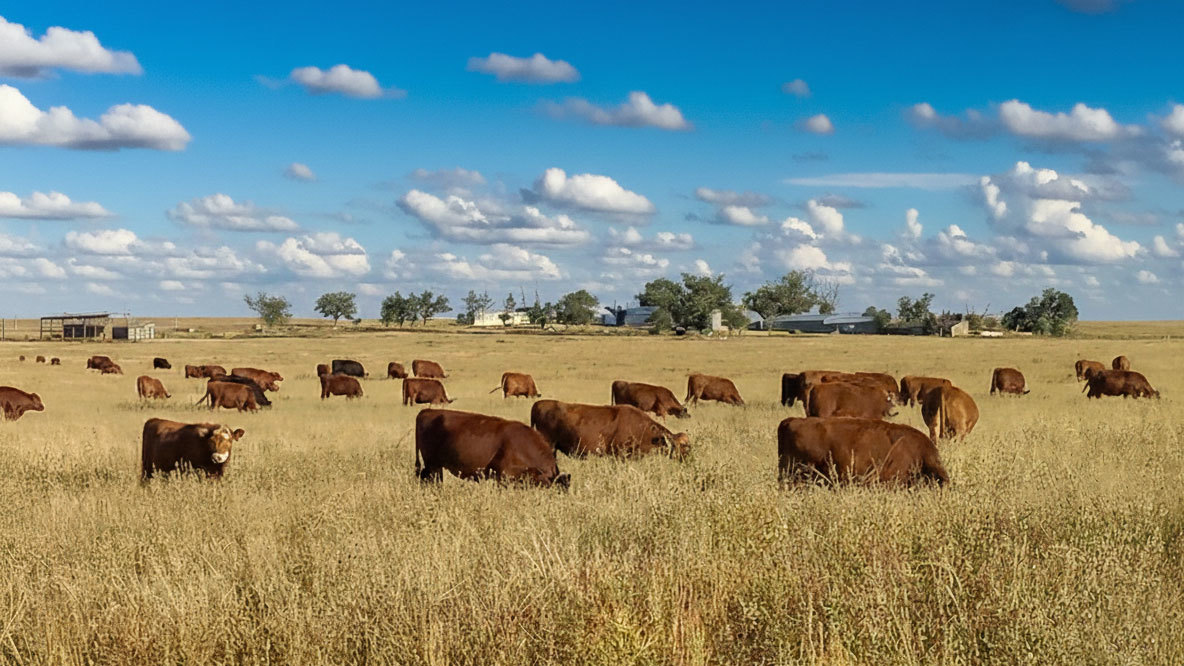
Palmer Ranch
Hugo, Colorado | Lincoln County | 11303 Acres
Property Information
The Palmer Ranch offering represents a rare, multi-generational ownership opportunity, being offered to the market for the first time by the Palmer family. Encompassing 11,303 deeded acres along with a section of State grazing land in eastern Colorado, the ranch reflects the exceptional stewardship of an award-winning grassland management operation. Palmer Ranch is a highly efficient cattle grazing enterprise characterized by low wintering costs and thoughtful resource utilization. Extensive water development and cross-fencing support regenerative, intensive grazing practices that emphasize short grazing durations and extended rest periods, resulting in a resilient and productive grassland resource.
Palmer Ranch is a highly efficient cattle grazing enterprise characterized by low wintering costs and thoughtful resource utilization. Extensive water development and cross-fencing support regenerative, intensive grazing practices, resulting in a resilient and productive grassland resource.Close Details
LOCATION
The ranch is conveniently situated 30 miles south of Hugo, Colorado, approximately 85 miles east of Colorado Springs, and 124 miles from Denver International Airport. Highway 94 borders the northern edge of the property, providing excellent access, while County Highway 63 runs north to south through the ranch.
The surrounding area is characterized by expansive grassland ranches and a strong tradition of long-established ranch ownership. Hugo serves as the county seat of Lincoln County, and together with nearby Limon, offers access to most major services. Regional livestock markets are well supported by sale barns in Burlington, La Junta, Brush, and Sterling, Colorado, as well as Ogallala, Nebraska.
ACREAGE
The Palmer Ranch encompasses 11,303 deeded acres, per County Assessor records, along with a 640-acre State of Colorado grazing lease. The ranch features a diverse and well-balanced landscape, with hard grass summer range across the western portions and softer sandhill winter range along the eastern areas. The hard grass country is well suited for intensive grazing practices, with two large summer units subdivided into multiple grazing paddocks using single-strand electric fencing. The sandhill winter range is characterized by gently rolling to hilly terrain that provides natural protection from winter storms, further enhanced by numerous owner-developed windbreaks throughout the ranch.
The ranch supports a wide variety of warm and cool season native grasses, including grama species, buffalo grass, bluestem, prairie sand reed, prairie cordgrass, switchgrass, and Indian grass. Through years of intensive grazing management and thoughtful soil, grass, and water development, the ranch’s resource base has been significantly enhanced, resulting in increased carrying capacity. The operation has historically been stocked with smaller-frame, efficient Red Angus–based cows and is estimated to support approximately 350 animal units, depending on cow size and management practices.
Current ownership practices year-round grazing with winter supplementation and does not feed hay. A base cow herd is maintained, with heifers retained for breeding and replacement. Grazing allocations typically budget approximately 16 acres per animal unit for five months of summer grazing and 14 acres per animal unit for seven months of winter grazing, subject to annual conditions.
A portion of the ranch, totaling 3,238.18 acres, is enrolled in the USDA NRCS Grassland Reserve Program under two separate contracts located within the sandhill winter range on the eastern portion of the property. The first contract, effective October 1, 2021, is a 10-year agreement covering 2,478.13 acres at $20 per acre. The second contract, effective October 1, 2023, is a 15-year agreement covering 760.05 acres at $16 per acre annually. Together, these contracts provide $61,723 in annual program income and align well with current operational practices. A new owner may work with NRCS to establish an operating plan that accommodates their intended management approach, should it differ from the existing program.
WATER
Water resources are extensive and well developed. The ranch is supplied by two shallow wells feeding an expanded pipeline system that includes two buried 10,000-gallon storage tanks and more than 20 pipeline-connected livestock drinkers. The system has been strategically enlarged over time to support the ranch’s grazing infrastructure. In addition, eight earthen reservoirs provide supplemental water resources. The ranch is divided into 29 grazing pastures, along with several smaller traps located near the building sites.
IMPROVEMENTS
Improvements include two primary headquarters, each offering a residence, shop, barn, sheds, and corrals. Additional corrals are located throughout the ranch to facilitate livestock handling away from the main building sites. The northern headquarters features a two-bedroom, one-and-a-half-bath home with additional living space in the basement. The centrally located southern headquarters includes a three-bedroom, one-and-a-half-bath home, also with additional basement space.
SUMMARY
Palmer Ranch presents a highly versatile and well-improved cattle operation in a desirable location with direct access from a paved highway. It offers the ideal balance of proximity to major cities while remaining far enough removed to provide a quiet, uninterrupted ranch lifestyle. Ranches of this caliber, featuring productive grasslands, operational efficiency, and thoughtfully developed infrastructure shaped by generations of consistent ownership. When they do, discerning buyers must be prepared to act decisively ahead of the competition.
 Download Brochure