
An October 27, 2026 federal directive targets grazing opportunities, permit renewals and public information. What changes for existing permit holders, and where can ranchers look for new opportunities?
November 3, 2026 — A new federal grazing directive could eventually influence how Western ranchers use public lands, but it does not immediately authorize additional cattle, add acreage to existing allotments or transfer federal grazing privileges with the sale of a ranch.
On October 27, Secretary of the Interior Doug Burgum signed Secretary's Order 3454, Supporting America's Ranchers through Resilient Rangelands.
The order directs Interior agencies to identify potentially suitable grazing lands, address permit-renewal delays, review suspended grazing use and improve public mapping of opportunities. For ranch owners, the important distinction is between a new agency priority and an actual, approved grazing authorization.
Why Was the October 27 Grazing Order Issued?
The Department of the Interior cites administrative delays, access to grazing opportunities, rangeland health and domestic livestock production among the reasons for the initiative. The order builds on a broader federal effort rather than creating an entirely new grazing system.
Federal Grazing Initiative: Key Milestones
| Date | Development | Why It Matters |
|---|---|---|
| March 31, 2026 | BLM announced a public vacant-allotment map. | Provided a starting point for exploring potential grazing opportunities. |
| September 4, 2026 | The President's Executive Order 14425 directed agencies to examine policies affecting American ranchers. | Established broader federal policy direction. |
| October 27, 2026 | Interior Secretary Doug Burgum signed Secretary's Order 3454. | Established agency assignments and implementation deadlines. |
What Changes Under Secretary's Order 3454?
The order seeks to accelerate administrative work and expand identification of possible grazing opportunities. Existing permit conditions and agency approvals still matter.
Before and After the October 27 Order
| Issue | Existing Framework | New Direction |
|---|---|---|
| Vacant allotments | Agencies could already evaluate qualifying public lands for grazing. | Identify additional potentially suitable lands and improve public information. |
| Permit renewals | Renewals follow agency review and applicable requirements. | Develop a plan to reduce the BLM renewal backlog. |
| Suspended AUMs | Suspended use is not currently authorized active grazing. | Review suspended AUMs for potential restoration where appropriate. |
| Maps and applications | BLM introduced its vacant-allotment map in March 2026. | Expand public mapping and improve opportunity information. |
| Existing permits | Permits specify authorized grazing and applicable conditions. | No automatic increase in AUMs or approval of additional grazing. |
What Changes for Ranch Owners?
For ranch owners and prospective buyers, the practical question is not simply whether more public land may be considered for grazing. It is whether a specific operation qualifies for an authorization and whether that authorization can be used economically.
What Ranch Owners Should Know and Review
| Ranch Owner Concern | What May Change | What Owners Should Do Now |
|---|---|---|
| Existing BLM permit | Renewal processing may receive additional agency attention. | Confirm permit terms, authorized AUMs, grazing season and renewal status. |
| Suspended grazing AUMs | Suspended use may be reviewed for possible restoration. | Verify active and suspended AUMs with the administering agency. |
| Vacant allotments | Additional potential grazing opportunities may be identified. | Review the BLM opportunity map and contact the responsible field office. |
| Ranch purchase or sale | The order does not automatically transfer grazing privileges. | Verify deeded acres separately from federal and state grazing authorizations. |
| Carrying capacity and value | Future authorized grazing could affect operating options. | Evaluate forage, livestock water, permitted AUMs, grazing seasons and operating costs. |
Important: An agency directive is not the same as an approved grazing authorization. Ranchers should not assume they can increase livestock numbers or begin grazing a newly identified allotment without the required agency approvals.
Where Ranchers and Landowners Can Review Federal Grazing Maps
The Bureau of Land Management introduced an online grazing opportunity map in March 2026. The map provides a starting point for identifying potential vacant allotments and exploring where grazing opportunities may exist.
View the Official BLM Interactive Grazing Opportunity Map
Additional federal resources include:
- BLM Livestock Grazing Program
- U.S. Forest Service Rangeland Management
- Department of the Interior — Secretary's Order 3454
How to use the map: Identify a potentially relevant allotment, determine the administering BLM field office, and contact that office to verify availability, eligibility, application procedures and authorized grazing conditions.
The map is an information resource, not a grazing permit. U.S. Forest Service grazing authorizations are administered separately.
What Current Permit Holders Should Review
Owners with federal grazing should revisit their current permit or lease, active AUMs, suspended AUMs, season of use, renewal status and actual livestock use.
An AUM (animal unit month) is a standard measure of forage use. Total acreage alone does not establish how many livestock an allotment can support.
- Confirm the administering agency, allotment number, permit holder and qualifying base property.
- Compare active permitted AUMs, suspended use and recent actual use.
- Review renewal dates, drought restrictions, grazing seasons and range improvements.
- Ask the responsible field office about newly identified opportunities and application requirements.
- For property transactions, verify grazing preference transfers or Forest Service waiver and reissuance requirements.
For additional guidance, read How Federal Grazing Permits Transfer in a Ranch Sale and How to Verify a Ranch's True Carrying Capacity Before You Buy.
Implementation Deadlines: What to Watch Next
The order includes administrative milestones measured from October 27, 2026. These are agency deadlines, not guaranteed opening dates for new grazing opportunities.
Selected Federal Implementation Milestones
| Timeframe | Expected Agency Work |
|---|---|
| 30 days | Identify lands potentially suitable for additional grazing. |
| 60 days | Develop a BLM plan addressing grazing-permit renewal backlogs. |
| Following months | Continue work on suspended AUMs, application processes and public mapping, subject to the order's detailed instructions. |
Ranchers should consult the official signed order and their administering agency for current requirements.
L Cross Ranch: Why Operating Acres and Deeded Acres Are Different
L Cross Ranch near Del Norte, Colorado, marketed by Mason & Morse Ranch Company, illustrates why buyers must separate deeded ownership from public grazing access.
The published listing describes a 60,025-acre operating ranch combining deeded land, BLM grazing, U.S. Forest Service grazing and Colorado state lease land.
L Cross Ranch — Published Operating Acreage
| Land Classification | Acres |
|---|---|
| Deeded land | 6,581 |
| BLM grazing | 11,460 |
| U.S. Forest Service grazing | 26,140 |
| Colorado state lease | 15,844 |
| Total operating acreage | 60,025 |
The federal grazing components total approximately 37,600 acres, but they are not deeded property. Their contribution depends on applicable authorizations, permitted use, grazing seasons, water availability and agency requirements.
The property also includes irrigated acreage and water resources supporting agricultural production. The October order does not automatically enlarge L Cross Ranch's existing grazing authorizations.
Learn more from the L Cross Ranch property profile and Mason & Morse Ranch Company's guide to Water Rights by State.
“A ranch’s total operating acreage is only the starting point. Buyers need to understand what is deeded, what grazing is authorized, how dependable the water resources are and how the operation functions. Federal grazing can be an important part of a ranch's overall value, but the real question is what those resources contribute to the operation economically.”
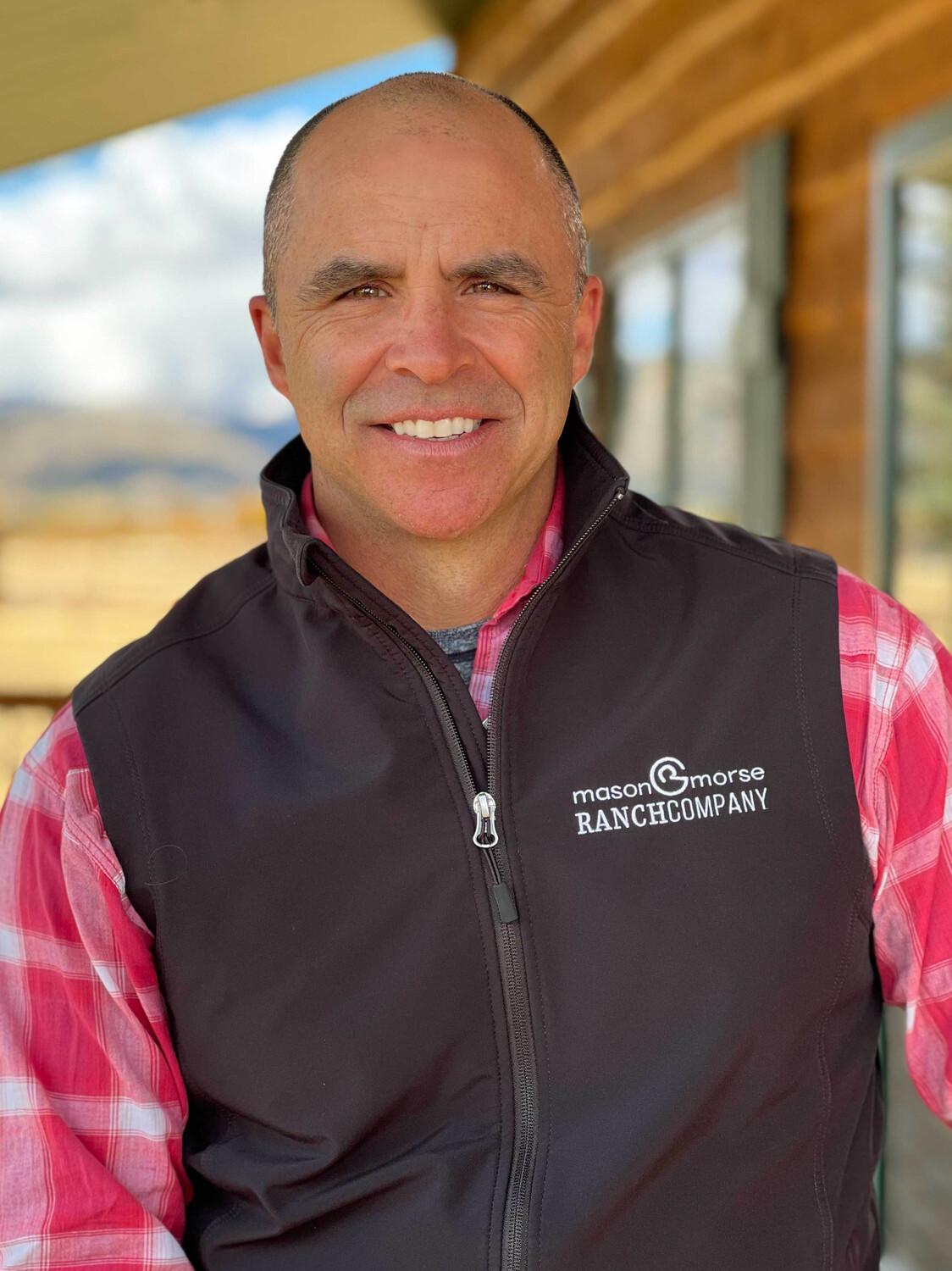
Bart Miller, ALC
Managing Broker and Partner
Mason & Morse Ranch Company
How Does Federal Grazing Influence Ranch Value?
Permitted grazing can contribute meaningful seasonal forage and operating scale, but federal grazing access is not the same as deeded ownership.
Buyers and sellers should evaluate authorized AUMs, water distribution, forage production, access, grazing seasons, operating costs and the reliability of existing authorizations.
A documented grazing history can be more informative than an acreage headline alone.
Mason & Morse Ranch Company discusses these considerations in Selling a Ranch With BLM, National Forest, or State Grazing Leases and Operational Land Intelligence.
What the Order Does Not Yet Establish
Neither the order nor a map listing demonstrates that additional AUMs have been authorized on a particular ranch, that a vacant allotment is available without review, or that grazing privileges automatically convey with a deed.
Those determinations remain specific to the administering agency, applicant, allotment and resource conditions.
About Mason & Morse Ranch Company
Founded in Colorado in 1961, Mason & Morse Ranch Company - www.ranchland.com is a brokerage firm specializing in the sale and valuation of working ranches, farms, recreational and sporting properties, and investment-grade rural land.
The company has completed more than $2 billion in ranch, farm, recreational, and rural land sales involving more than 1.2 million acres. Licensed across 13 states and backed by more than 133 years of combined broker experience, its land professionals bring firsthand knowledge of grazing operations, water rights, agricultural production, livestock capacity and rural property transactions.
Guided by its Live It to Know It® philosophy, Mason & Morse Ranch Company is recognized as the authority on western land values.
Sources: Secretary's Order 3454; Department of the Interior announcement; BLM Livestock Grazing Program; L Cross Ranch.